
MOLECULAR SIEVE
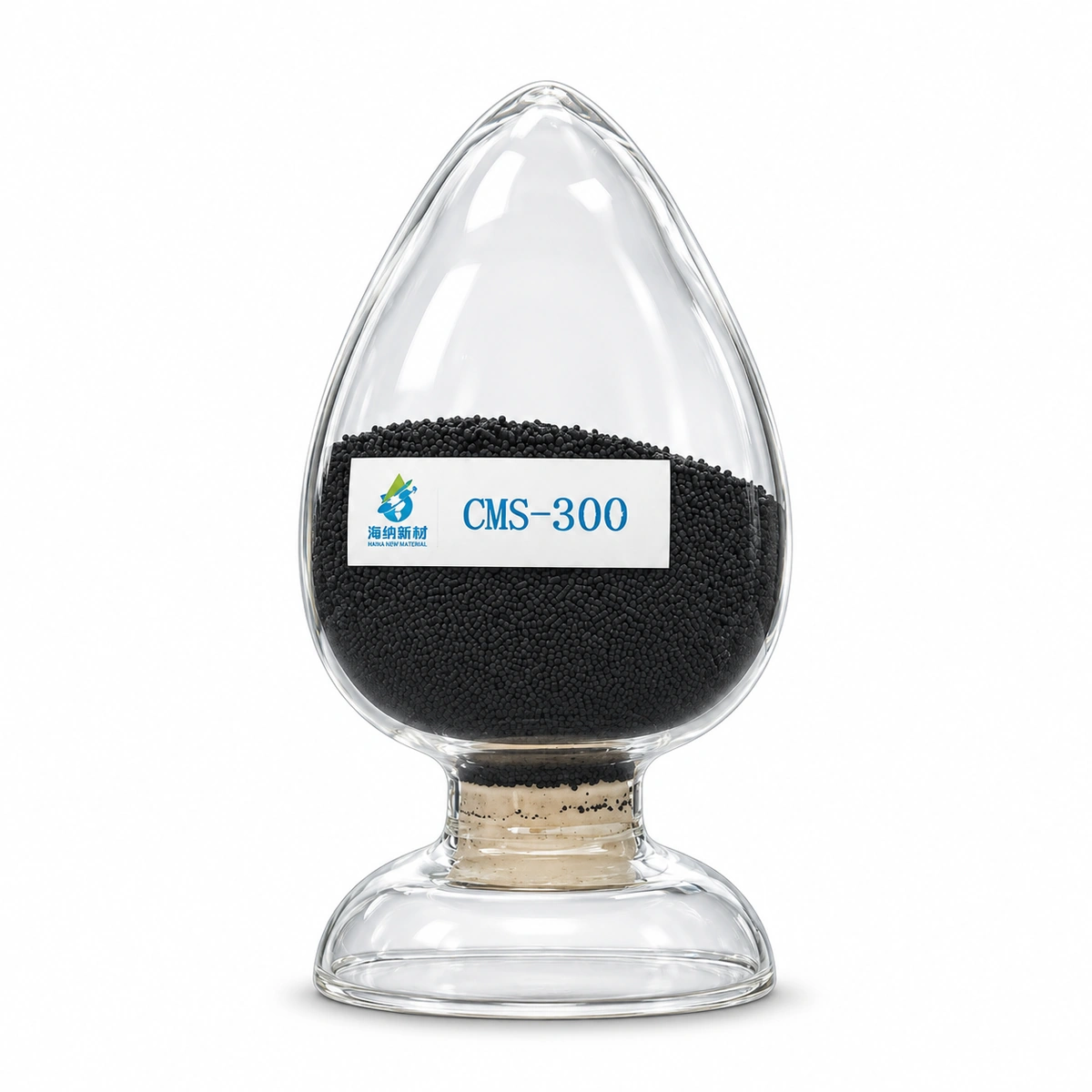
CMS-300 Carbon Molecular Sieve
CMS-300 is a Haina carbon molecular sieve grade for PSA nitrogen generation. Under the original page’s stated conditions, its table lists a nitrogen yield of 300 L/kg·h at 99.5% purity.
| Model | CMS-300 |
| Diameter | 1.0–1.3 mm |
| Particle Strength | ≥90 N |
| Standard Packaging | 20, 40 or 137 kg/drum |
Product Overview
The grade has a specified diameter of 1.0–1.3 mm, particle strength of at least 90 N and moisture content no greater than 0.5%. Published performance points extend to 99.999% nitrogen purity.
Applications
Use the purity/yield data to discuss a suitable operating point for nitrogen-generation equipment. Actual performance should be reviewed with the equipment design and feed-air conditions.
Technical Data
Physical Properties
| Item | CMS-300 Carbon Molecular Sieve Specifications |
| Diameter | 1.0-1.3mm |
| Bulk Density | ≥660Kg/m³ |
| Particle Strength | ≥90N |
| Attrition Resistance | ≤1% |
| Moisture Content | ≤0.5% |
| Standard Packaging | 20 kg/drum, 40 kg/drum, 137 kg/drum |
Nitrogen Generation Performance
| Adsorption Pressure | Nitrogen Purity (%) | Nitrogen Yield (L/kg·h) | Air-to-Nitrogen Ratio |
| 0.7MPa | 99.5 | 300 | 1:3.2 |
| 99.9 | 220 | 1:3.8 | |
| 99.99 | 180 | 1:4.9 | |
| 99.999 | 120 | 1:6.0 |
Published test conditions: adsorption pressure 0.7 MPa; adsorption time 42–50 seconds; pressure equalization 1–2 seconds. Review the purity, yield and air-demand values at the same operating point.
Defined Grade Data
Model-specific physical and nitrogen-performance tables are provided.
Industrial PSA Use
Developed as part of Haina’s nitrogen-generation material range.
Purity & Productivity
Compare the required purity with the corresponding listed nitrogen yield.
Storage & Selection
What information is needed to select CMS-300?
Please provide the feed-gas composition, desired product purity, required flow rate, operating pressure and temperature, plus the equipment configuration and cycle. For an existing system, include its current material grade and operating results. These details help Haina discuss a grade under comparable conditions.
How should I compare product specifications?
Compare values at the same test conditions and purity target. Particle size, bulk density and mechanical properties also matter to the vessel and process. The data on this page are a selection reference; request the current specification and confirm the relevant operating point before ordering.
How should unopened and unused material be stored?
Keep containers tightly sealed and dry. Prepare the equipment before opening a package, minimize exposure to humid air, and promptly reseal any unused material. Follow the product-specific storage instructions supplied with the order.
What should be checked before changing the adsorbent?
Identify the cause of the performance change first. Review feed pretreatment, moisture and oil carryover, filtration, pressure stability and the equipment cycle. Share the operating history with Haina so material selection can be discussed together with the condition of the system.
Does adding more CMS always improve nitrogen production?
No. Bed quantity must match vessel design, packing density, gas distribution and the PSA cycle. Uneven loading or localized high-velocity flow can reduce performance and damage particles. Follow the equipment supplier’s approved filling and commissioning procedure.
Related Products


PRODUCT & APPLICATION SUPPORT
Discuss the Right Material with Haina
Share your target gas, purity, flow and operating conditions. Our team can help you explore the relevant product range and specifications.