
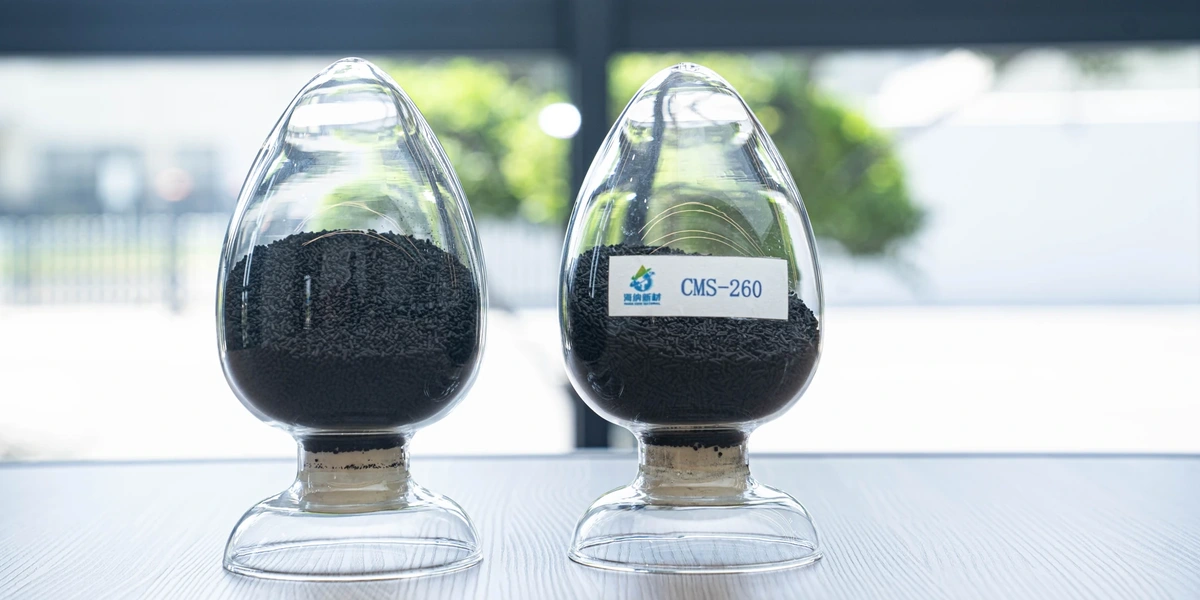
Carbon Molecular Sieves for PSA Nitrogen Generation
Carbon molecular sieve is the adsorbent at the center of an on-site PSA nitrogen generator. Its job is to remove oxygen from compressed air quickly enough for the system to deliver nitrogen at the required purity and flow. The choice of CMS grade matters because its performance depends on the conditions in the generator.
How the PSA cycle separates nitrogen
A pressure swing adsorption system sends pretreated compressed air through a vessel packed with carbon molecular sieve. During the adsorption step, oxygen enters the pores more quickly than nitrogen. The gas leaving the vessel becomes enriched in nitrogen. The operating cycle switches the vessel out of production before its outlet falls outside the target specification.
When the vessel depressurizes, it releases much of the adsorbed gas and regenerates the bed for the next cycle. A typical twin-vessel generator alternates the two beds so that one can produce nitrogen while the other regenerates. The balance between adsorption time, regeneration and demand determines how much nitrogen the equipment can reliably deliver.
Compare grades under the same conditions
Haina offers CMS-260, CMS-280, CMS-300, CMS-330 and GXN-CMS. A useful comparison starts with a common outlet purity, inlet pressure and cycle basis. Comparing results measured at different oxygen limits or under different cycling conditions can make a grade look more productive than it would be in the proposed system.
Ask for the nitrogen output at your required residual oxygen level, and check which reference conditions are used to report flow. Where air consumption data are available, review them alongside productivity. The most appropriate grade depends on the required nitrogen quality, available compressed air and vessel design.
What to share for a grade discussion
- Required nitrogen purity or maximum residual oxygen, with units.
- Normal and peak nitrogen flow, with the reference conditions for reported flow.
- Inlet pressure, air temperature and available information on pressure dew point and pretreatment.
- Generator make, current CMS grade and bed volume when evaluating a replacement.
- Operating pattern and the conditions under which performance changed, if troubleshooting.
Moisture, oil carryover or changed cycle settings can affect performance. For an existing unit, check the air treatment and operating history as part of the assessment. Evaluate any grade change against the generator’s operating conditions and the criteria the finished system must meet.
Explore Haina’s CMS grades
See the available grades or share your required purity, flow and equipment details with Haina.